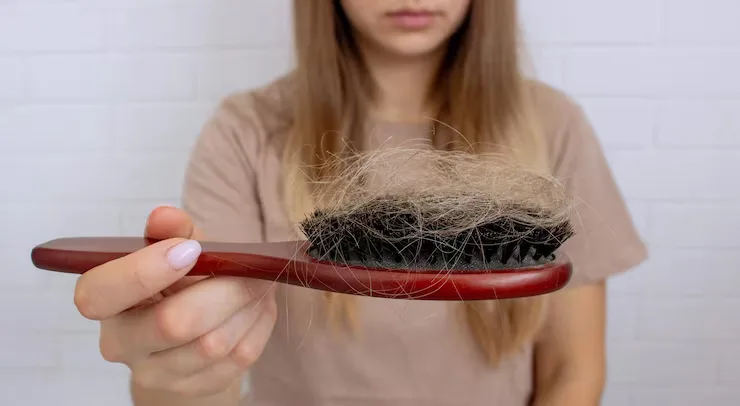

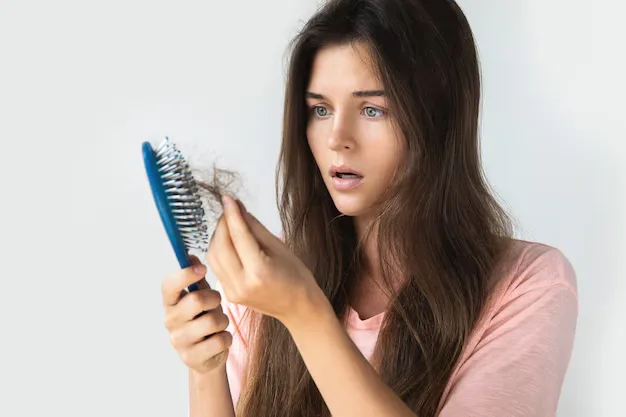
Finding more hair on your pillow or in the drain is worrying. Here's the honest answer: the right hair loss treatment depends on the cause, and the American Academy of Dermatology (AAD) says treatment without an accurate diagnosis is often ineffective.
Many people don't need treatment at all. Losing 50 to 100 hairs a day is normal, and the NHS says most hair loss is temporary or a normal part of getting older.
Hair Fall or Hair Loss: Which One Do You Have?
What most people call "hair fall" is usually shedding: you lose more hairs than usual, but your hair keeps growing. Hair loss means something has stopped it from growing.
Shedding (telogen effluvium) usually starts a few months after a trigger like giving birth, a high fever, surgery, major stress, losing 20 pounds (about 9 kg) or more, or stopping birth control pills. The AAD says hair usually regains its fullness within 6 to 9 months, though shedding can drag on if the stress continues.
Hair loss (anagen effluvium) comes from causes like hereditary hair loss, an overactive immune system, some drugs, tight hairstyles, or harsh hair products, and hair won't regrow until the cause stops. Some people have both.
Either way, MedlinePlus says to see a doctor if you have:
If it began after a new medicine, ask the prescribing doctor and don't stop it on your own, as the AAD advises. The NHS also suggests finding the cause with a doctor before going to a commercial hair clinic.
- Fast hair loss, or loss that starts in your teens or twenties
- Pain or itching, or a red, scaly, or infected scalp
- An unusual pattern, or bald spots in your beard or eyebrows
- Male-pattern baldness in a woman, or hair loss with acne, facial hair, or irregular periods
- Weight gain, muscle weakness, fatigue, or feeling cold easily
Match the Treatment to the Cause
Each cause needs a different approach, and some need none. Here's the usual direction, based on the AAD:
| Cause | Common signs | Treatment direction | Can hair regrow? |
|---|---|---|---|
| Pattern (hereditary) hair loss | Men: receding hairline or bald spot on top. Women: overall thinning or a wider part | Long-term medicine, sometimes with procedures | Can slow loss and may regrow hair, best started early |
| Childbirth, illness, surgery, or stress | Heavy shedding a few months later | Usually just time | Yes, often within 6 to 9 months |
| Alopecia areata | Bald patches, sometimes on eyebrows or eyelashes | Corticosteroid injections for a few patches | Yes, alone or with treatment |
| Scalp ringworm | Scaly patches, small black dots | Antifungal medicine | Yes, once the infection clears |
| Tight hairstyles or chemical treatments | Thinning where hair is pulled or processed | Change the habit early | Not from already damaged follicles |
| Thyroid disease | Thinning, sometimes clumps when brushing | Treat the thyroid | Yes |
| Hormonal imbalance (such as PCOS), low iron, zinc, or protein, or a medicine side effect | Thinning, or loss after a new drug | Treat the cause, test before supplements | Often, once treated |
Medical Treatments with the Strongest Evidence
For pattern hair loss, minoxidil and finasteride have the best evidence: the NHS calls them the main treatments for male pattern baldness. Both take months and only work while you keep using them.
Minoxidil
Minoxidil is a liquid you apply to your scalp, usually once or twice a day. The AAD says it helps early hair loss but can't regrow a full head of hair, and results usually take 6 to 12 months.
MedlinePlus says it works best in people under 40 with recent hair loss and does nothing for a receding hairline. Using more won't speed things up. Our minoxidil guide (in Indonesian) has more on side effects.
In Indonesia, BPOM-registered minoxidil solutions carry a DKL number. The "K" means obat keras: you need a doctor's prescription to buy it, so see a doctor first and check the number on the pack.
Finasteride
Finasteride is a daily pill approved by the US FDA for male pattern hair loss. The AAD says it can slow hair loss and stimulate new growth, usually after about 4 months, and the loss returns once you stop. It is also obat keras in Indonesia, so discuss side effects with your doctor first.
The NHS says women should not use finasteride, while the AAD says a dermatologist may prescribe it for a woman with hereditary hair loss who cannot get pregnant.
Spironolactone for Female Pattern Hair Loss
The AAD lists spironolactone as an option for female pattern hair loss that may stop further loss and increase thickness, and studies suggest it works for about 40% of these women. You must avoid pregnancy while taking it, because it can cause birth defects.
Corticosteroid Injections for Alopecia Areata
For a few patches of alopecia areata, the AAD calls corticosteroid injections the most effective treatment. They are given every 4 to 8 weeks, and in one study of 127 patients, more than 80% regrew at least half their hair within 12 weeks.
Procedures and Devices: PRP, Laser, Microneedling, and Transplant
These options usually go alongside medicine, not instead of it. The evidence is early to moderate, and most need repeat sessions. A dermatologist can combine medication with in-clinic hair treatment, and the AAD says procedures done by a dermatologist tend to work better than at-home treatments.
Platelet-Rich Plasma (PRP)
A little of your blood is drawn, separated in a machine, and the plasma is injected into thinning areas. The AAD says it takes about 10 minutes with usually no downtime, monthly for 3 months and then every 3 to 6 months, and some people shed less within the first few months.
A 2025 systematic review of 43 randomized trials found moderate evidence that PRP increases hair density and reduces hair loss, but not hair thickness. Results seem to depend on how the plasma is prepared: if you're considering PRP hair treatment, ask the clinic about its method.
Low-Level Laser Therapy
The AAD says a few studies suggest in-office laser therapy may help hereditary hair loss, alopecia areata, and hair loss after chemotherapy. It's safe and painless but may need several sessions a week for many months. Home laser combs and caps have fewer studies: in one trial, some users got thicker hair, but not everyone.
Microneedling
In one study of men aged 20 to 35 with mild to moderate hereditary hair loss, weekly microneedling plus 5% minoxidil gave significantly more growth after 12 weeks than minoxidil alone. Devices are sold without a prescription, but the AAD advises asking a dermatologist first, since microneedling can worsen some conditions.
Hair Transplant
For thinning or bald areas from pattern hair loss, the AAD says a transplant can be an effective and permanent solution.
Home Care That Supports Your Treatment
Home care won't reverse pattern hair loss, but gentle habits protect hair that's already fragile. The AAD recommends:
What about natural remedies? In one trial of 100 people with pattern hair loss, rosemary oil and 2% minoxidil both increased hair count at 6 months, but there was no placebo group. A 2025 review adds that many herbal studies are small and short, so treat them as add-ons.
- A gentle shampoo, with conditioner after every wash
- A microfiber towel, low blow-dryer heat, and hot styling tools only for special occasions
- No hot-oil treatments, and no tight ponytails, braids, or buns
- Quitting smoking, and eating enough iron and protein
- Biotin, iron, or zinc only if a blood test shows you're low, since too much selenium, vitamin A, or vitamin E has been linked to hair loss
Read more (in Indonesian): Perawatan Rambut Rontok yang Tepat Sesuai Penyebabnya
Hair Loss Treatment FAQ
Is There a Permanent Cure for Hair Loss?
Not as a one-time fix. The NHS says no treatment is 100% effective. Shedding after stress or childbirth usually stops on its own, and the AAD calls a hair transplant a permanent option for pattern baldness.
Can You Stop Hair Loss Immediately?
No. MedlinePlus says minoxidil needs at least 4 months, possibly up to a year, before any effect shows, and finasteride takes about 4 months. Starting early improves your chances.
Is Hair Loss Treatment Different for Men and Women?
Partly. Men tend to lose hair at the hairline or on top, while women more often see overall thinning or a wider part. Both can use minoxidil, finasteride is mainly for men, and spironolactone is an option for women.
Getting a Hair Loss Consultation at Sozo Skin Clinic
If your shedding started a few months after childbirth, illness, or stress, and you have none of the warning signs above, you probably don't need treatment yet. If the loss is gradual, patchy, or not slowing down, get it checked.
At Sozo Skin Clinic, a doctor checks your scalp and history first, then tells you whether you need treatment at all and which options fit. Results vary from person to person. You can book a consultation through WhatsApp Sozo.

References:
- Do you have hair loss or hair shedding? | American Academy of Dermatology
- Hair loss: Who gets and causes | American Academy of Dermatology
- Hair loss: Diagnosis and treatment | American Academy of Dermatology
- Hair loss: Tips for managing | American Academy of Dermatology
- Hair loss | NHS
- Hair loss | MedlinePlus Medical Encyclopedia
- Minoxidil Topical | MedlinePlus
- Platelet-Rich Plasma in the Management of Alopecia: A Systematic Review and Meta-Analysis of Clinical Evidence | Dermatology and Therapy, 2025 (PubMed)
- Rosemary oil vs minoxidil 2% for the treatment of androgenetic alopecia: a randomized comparative trial | Skinmed, 2015 (PubMed)
- Herbal Remedies for Hair Loss: A Review of Efficacy and Safety | Skin Appendage Disorders, 2025 (PubMed)
- Cek Produk BPOM | Badan POM
- Nomor Izin Edar Obat | Balai POM di Tasikmalaya
- Beli Obat di Tempat Legal | Badan POM